


kategória
szerző
cím
sorozat
betöltés...
kiadó
betöltés...
ISBN
évszám
ár
-
leírás
Előrendelhető
A mezők bármelyike illeszkedjen
A mezők mind illeszkedjen



Transformations of Literary Texts [antikvár]
Máté Zsuzsanna, Zsuzsanna Máté

PREFACE
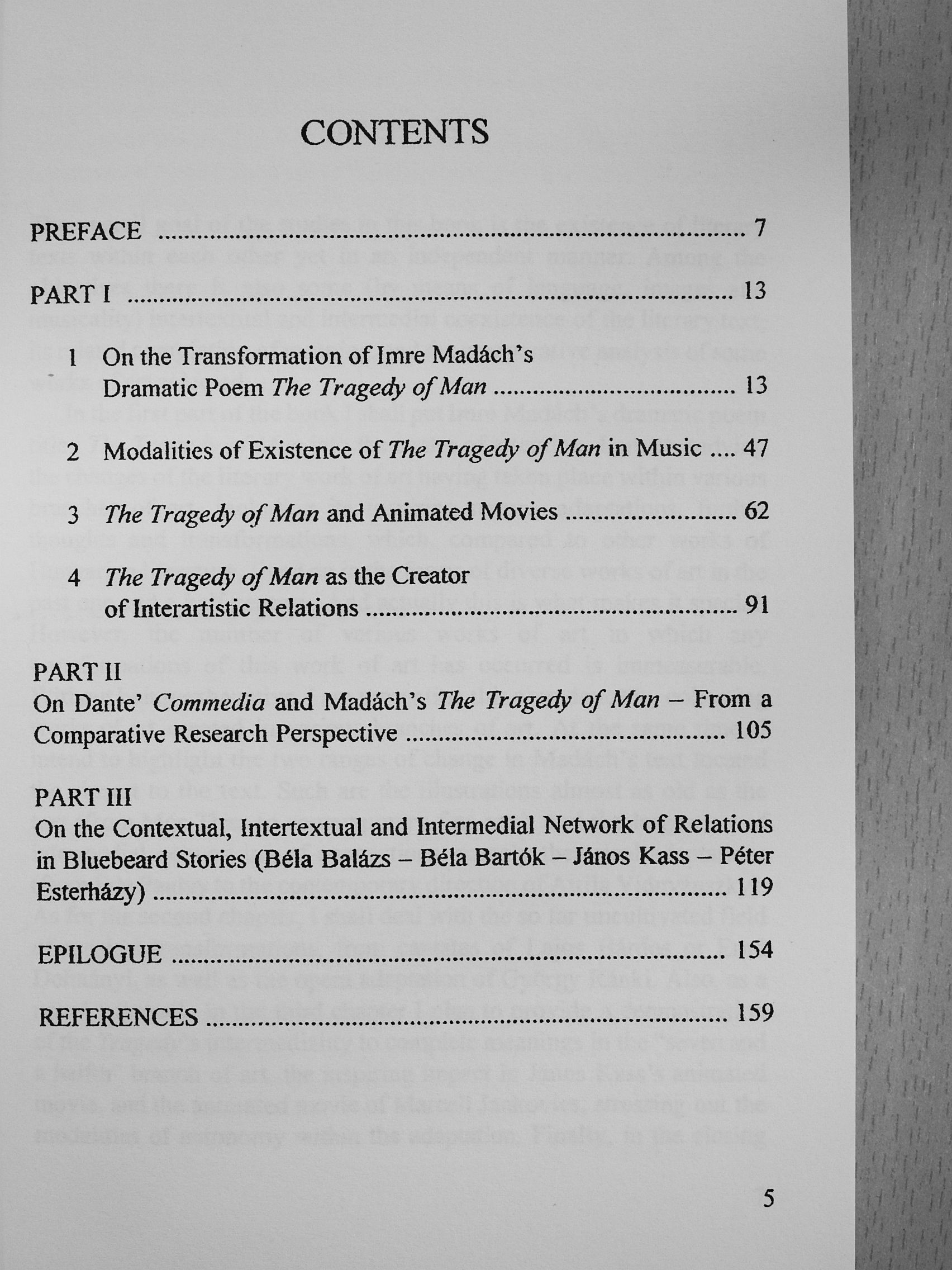
The overall goal of the studies in this book is the existence of literary texts within each other yet in an independent manner. Among the objectives there is also some (by means of language, images and musicality) intertextuai and intermedial coexistence of the literary text, its related completion of meaning, and the comparative analysis of some works of art selected.
In the first part of the book I shall put Imre Madách's dramatic poem titled The Tragedy of Man into the centre of attention. I am at studying the changes of the...
online ár:
Webáruházunkban a termékek mellett feltüntetett fekete színű online ár csak internetes megrendelés esetén érvényes.
2480 Ft

Részletesen erről a termékről
Bővebb ismertető
PREFACE
The overall goal of the studies in this book is the existence of literary texts within each other yet in an independent manner. Among the objectives there is also some (by means of language, images and musicality) intertextuai and intermedial coexistence of the literary text, its related completion of meaning, and the comparative analysis of some works of art selected.
In the first part of the book I shall put Imre Madách's dramatic poem titled The Tragedy of Man into the centre of attention. I am at studying the changes of the literary work of art having taken place within various branches of art, including its inspiring nature, adaptations, further thoughts and transformations, which, compared to other works of Hungarian literature, lived on in the forms of diverse works of art in the past one and a half century. And actually this is what makes it special. However, the number of various works of art in which any transformations of this work of art has occurred is immeasurable. Without being exhaustive, I am presenting this abundance by collecting works of art created in various branches of art. At the same time, I intend to highlight the two ranges of change in Madách's text located the closest to the text. Such are the illustrations almost as old as the text (from Mór Than to contemporary fine arts), and the largest set of intermedial networking of cormections, namely theatrical adaptations (from Ede Paulay to the contemporary direction of Attila Vídnyánszky). As for the second chapter, I shall deal with the so far uncultivated field of musical transformations, from cantatas of Lajos Bárdos or Emö Dohnányi, as well as the opera adaptation of György Ránki. Also, as a novel approach, in the third chapter 1 plan to provide a demonstration of the Tragedy's intermediality to complete meanings in the "seven and a halfth" branch of art, the inspiring impact in János Kass's animated movie, and the animated movie of Marcell Jankovics, stressing out the modalities of autonomy within the adaptation. Finally, in the closing
Termékadatok
Cím: Transformations of Literary Texts [antikvár]
Kiadó: Magyar Irodalmi Társaság
Kötés: Ragasztott papírkötés
Méret: 130 mm x 200 mm
Új vásárló vagyok!
új vásárlóval indíthatsz rendelést............