


kategória
szerző
cím
sorozat
betöltés...
kiadó
betöltés...
ISBN
évszám
ár
-
leírás
Előrendelhető
A mezők bármelyike illeszkedjen
A mezők mind illeszkedjen




Editor's Foreword
Undergraduates often find a great challenge in reading a seminal thinker's major contributions to social science in their original form. But students are usually oflEered either volume-length works containing stimulating passages embedded in outworn discussions, or brief excerpts included with those of other authors in general collections of readings. The longer works tend to be repetitious and wordy, and some now appear misguided. At the same time, excerpts in general collections do not give enough of a contributor's work...
online ár:
Webáruházunkban a termékek mellett feltüntetett fekete színű online ár csak internetes megrendelés esetén érvényes.
3980 Ft

Részletesen erről a termékről
Bővebb ismertető
Editor's Foreword
Undergraduates often find a great challenge in reading a seminal thinker's major contributions to social science in their original form. But students are usually oflEered either volume-length works containing stimulating passages embedded in outworn discussions, or brief excerpts included with those of other authors in general collections of readings. The longer works tend to be repetitious and wordy, and some now appear misguided. At the same time, excerpts in general collections do not give enough of a contributor's work to make him come alive.
In planning the present series, John T. Hawes, Director of the College Department of the Thomas Y. Crowell Company, and I sought manuscripts free from either of the above weaknesses. The editors were asked to dig out the main lines of a contributor's method and thought from the verbiage and the dated materials obscuring them, and to make available, in one slim volume, a critical essay together with the most significant and interesting passages in a contributor's writings. The volumes in the series, considered as a whole, thus give the student an understanding of the diverse ways of thought that have gone into the making of the social science discipline as we now know it.
The series has been edited and written so that each little book can be read for its own merits and without need of additional props. Each contains the seminal ideas of an author which still remain alive today but does not gloss over his weaknesses. Each book provides a critical vignette of the social scientist as he is now seen. Each book, too, should be interesting to college sophomores and especially to undergraduate majors in the various social sciences.
What all volumes in the series have in common is an educative conception. They are all efforts to interest undergraduates in some of
Termékadatok
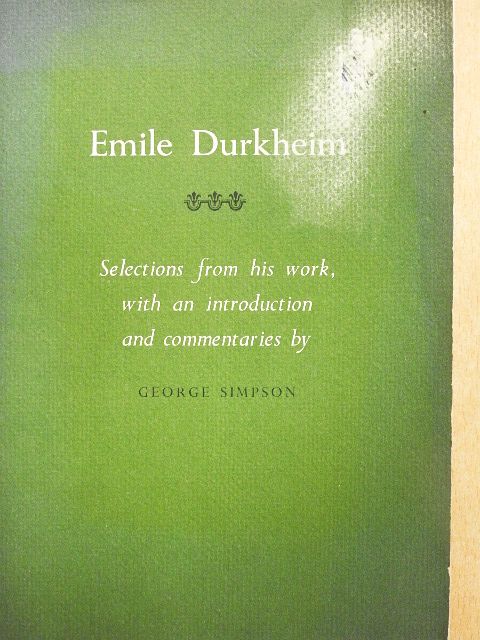
Cím: Emile Durkheim [antikvár]
Szerző:
Emile Durkheim
Kiadó: Thomas Y. Crowell Company
Kötés: Ragasztott papírkötés
ISBN: 0690258747
Méret: 140 mm x 210 mm
Új vásárló vagyok!
új vásárlóval indíthatsz rendelést............